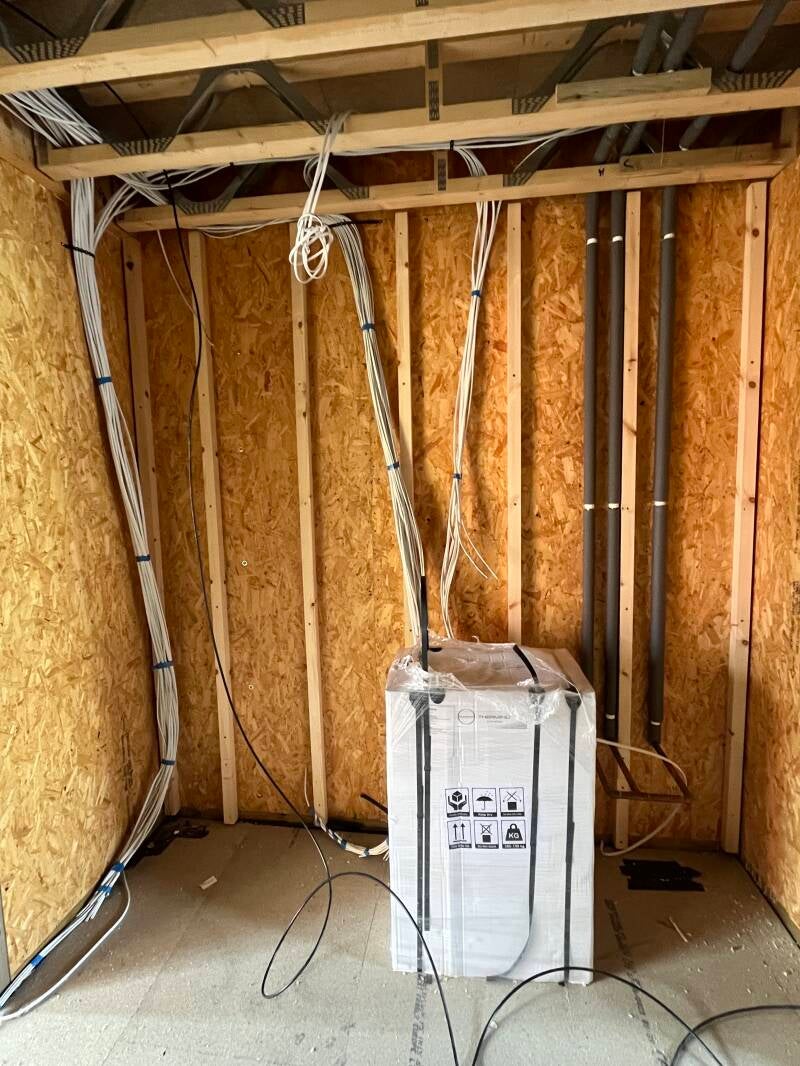
We have been rather quiet on the blog front for a while which is probably because we have gone beyond the real transformational stuff (eg foundations, walls, roof, cladding) into the more detailed parts of construction: in particular first fix of electrics and plumbing.
What we hadn't appreciated before hand is quite how much thought needs to go into where everything goes and the number of decisions, as the home owner, we need to make.
With the electrics the key thing is to think ahead and try and imagine living in the house and what you will need where. We've lived in houses where power sockets were at a premium - a couple of double sockets (and as a result several extension leads!) in a double bedroom if you were lucky! Starting from scratch you are not limited and so the sitting / dining room has five double sockets.
As well as power, decisions also have to be made on lighting inside and outside and data cables. Although it isn't critical to know exactly what all the light fittings will be, choices such as track lighting versus embedded ceiling lights need to be made for first fix.
An advantage of going for the already thought through design from Wunderhaus is that we are not starting from a blank canvas but adapting from their layout of sockets and light fittings etc
The plumbing has been more straightforward than the electrics and we made most decisions on what sanitary ware and taps etc we wanted some time ago. Having said that there have been a couple of tricky moments, notably when it didn't look like our wall mounted taps could fit in a wall which housed a pocket door (sliding door). However, we have founds that in general a good tradesperson will find a solution to issues which pop up.
Another element of first fix is ensuring that we have all the timber in place to hold the plaster board. We also learnt a new word "pattressing" which is boarding you put in walls, behind the plaster board, to support heavy wall-mounted items, such as televisions and vanity units.
Building an eco house does add a few more constraints over a normal build. For example, as airtightness is so important you need to minimise the number of times you drill through the outer (SIP) wall. Each hole has to be resealed with special "paint". Having an MVHR installed also adds complexity as air flow ducts have to sit alongside pipes and cables.
Add comment
Comments